 |
 |
||||
     |
|||||
The Cruise |
|||
 |
|||
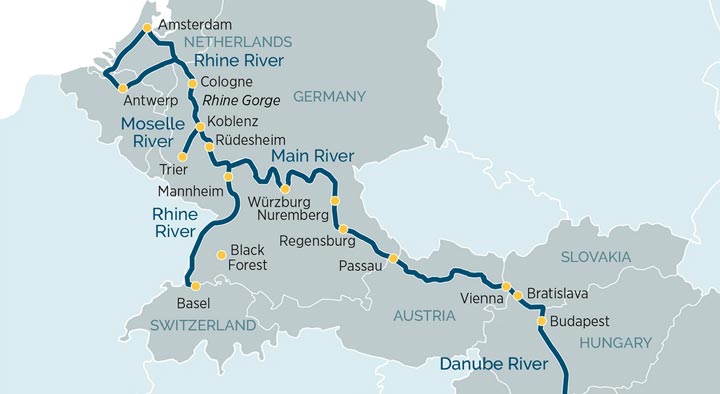
| On Day 1 we flew from Heathrow to Schiphol airport in the Netherlands where we were met by an Emerald representative who escorted us to our cruise boat - the Emerald Destiny. | |||
| Note that you can jump to a particular city by clicking on its name below and then jump back to the top of this page by clicking on the go to the top of this page link | |||
| From there we visited: | |||
| After breakfast on Day 15 we flew back to Heathrow from Budapest! | |||
Warning - this is a long page, with more than 100 photographs! Thanks to Artificial Intelligence provided by Google I was able to add some significant descriptions to several of these photographs. I have tried to mix photographs Liz took with those I took. |
|||
| Day 2: Amsterdam | go to the top of this page | ||
 |
|||
| Emerald Destiny - our home for the next two weeks! | |||
 |
 |
||
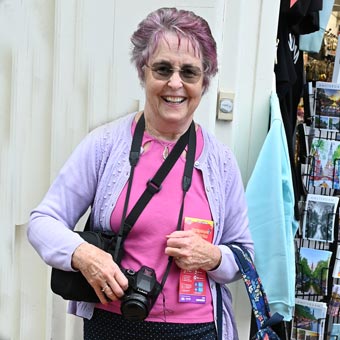
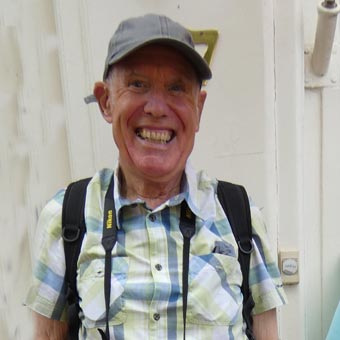
| Liz and John - click to find out what they're wearing on their feet! | |||
 |
|||
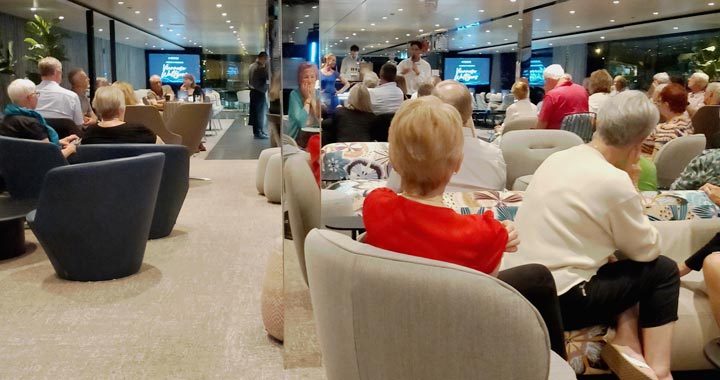
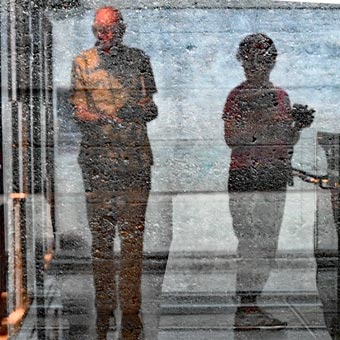
| The lounge - it was nice, after the multi decks of an ocean going ship, to only have three decks to deal with! Can you see Liz's reflection? |
|||
 |
 |
||
| Through a glass, darkly | At the railway station - what is it? | ||
 |
|||
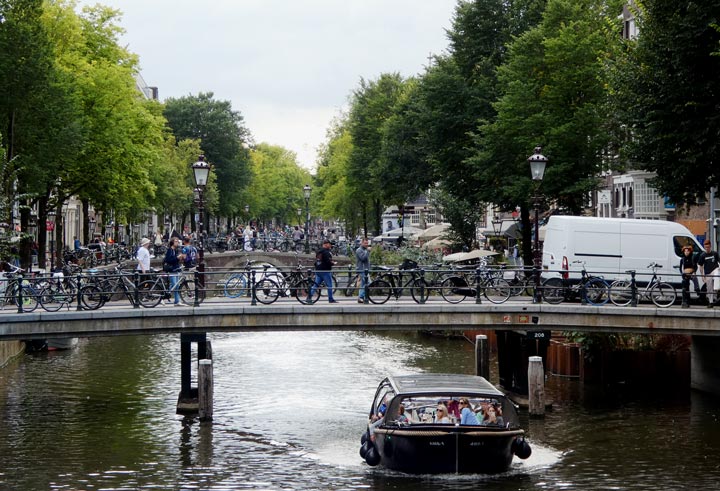
| Amsterdam: Canals, boats and bicycles | |||
| Day 3: Cologne | go to the top of this page | ||
 |
 |
||
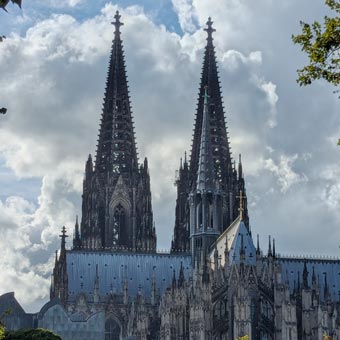
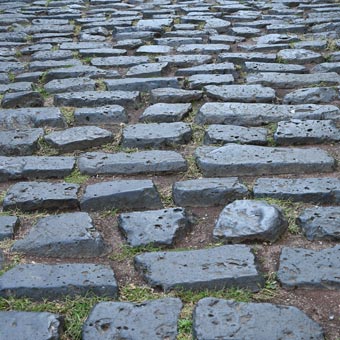
| The Cathedral | A Roman Road, still walkable - and NO potholes! | ||
 |
|||
| The view across the city | |||
 |
 |
||
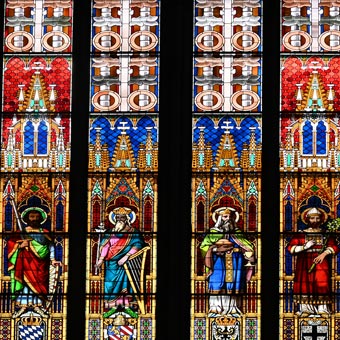
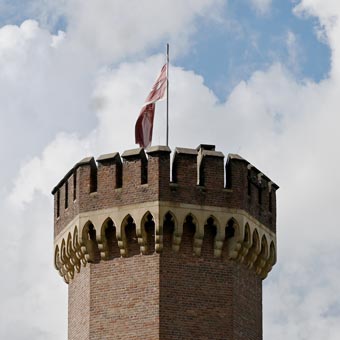
| Stain-glass windows inside the Cathedral | The Malakoff Tower, or Malakoffturm, a historic defensive tower located in Cologne, by the Rhine river bank. | ||
| Day 4: Rudesheim | go to the top of this page | ||
 |
 |
||
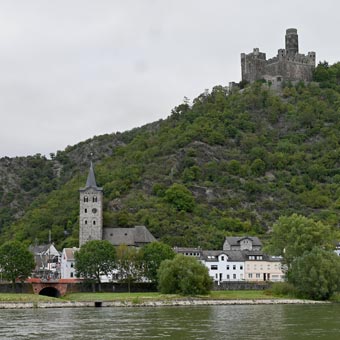
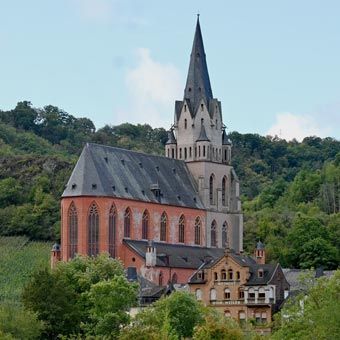
| The village of Wellmich and the imposing Maus Castle, which overlooks the Rhine River in the Upper Middle Rhine Valley, a UNESCO World Heritage site. | The Liebfrauenkirche (Church of Our Lady) in Oberwesel | ||
 |
 |
||
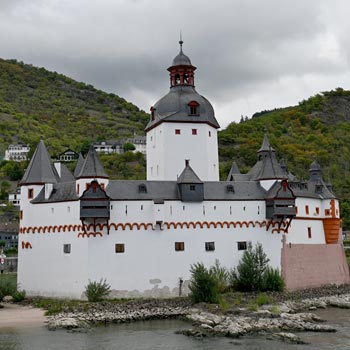
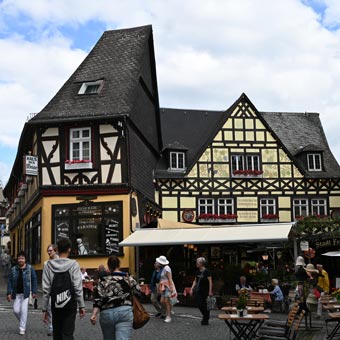
| The distinctive Pfalzgrafenstein Castle, a former toll castle situated on Falkenau island in the Rhine River near Kaub, Germany. | Rudesheim | ||
 |
 |
||
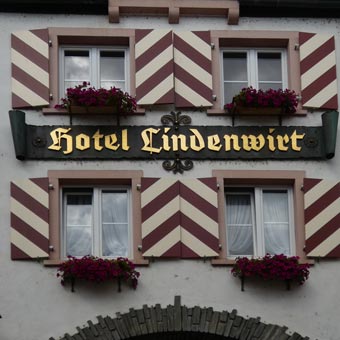
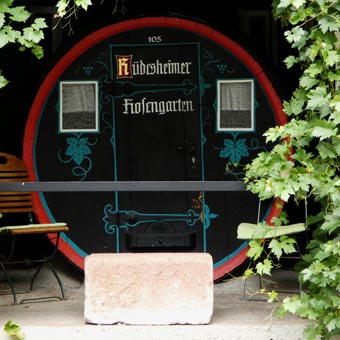
| We stayed in this hotel when we visited Rudesheim | These "Rooms in a Barrel" were in the courtyard! | ||
| Day 5: Mitenberg - Wertheim | go to the top of this page | ||
 |
|||
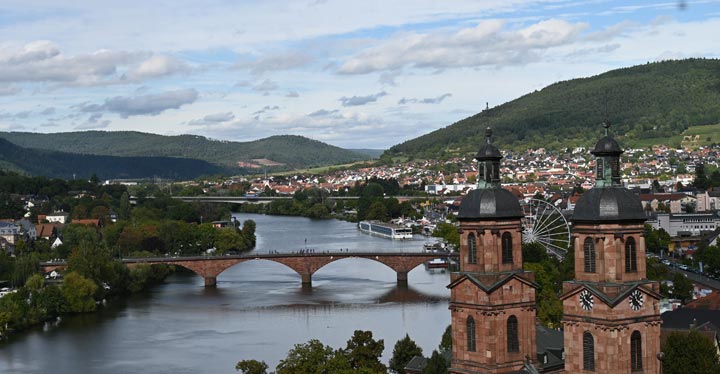
| A scenic view of the historic town of Miltenberg, situated on the Main River. The image taken from the Miltenberg castle, shows the town's distinctive red sandstone bridge and church towers, surrounded by forested hills. | |||
 |
 |
||
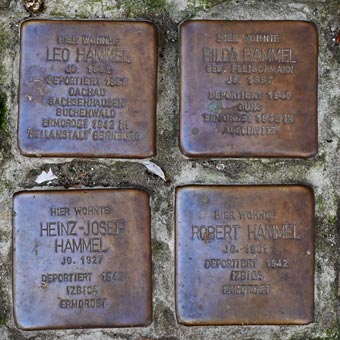
| Four Stolpersteine (stumbling stones), which are small, brass-plated concrete cubes embedded in the pavement as a memorial to victims of the Holocaust. Each stone commemorates an individual who lived at that location before being persecuted by the Nazis. More than 70,000 such stones have been laid across Europe. |
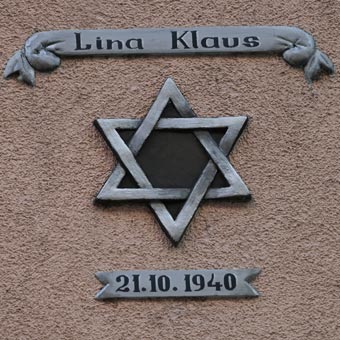
This photograph is a memorial plaque for Karoline (Lina) Klaus (born 1865) on Maingasse 3 in Wertheim. The plaque indicates her deportation on October 21, 1940, during the Holocaust. She was one of many individuals persecuted by the Nazis. The date marks the day of her deportation. |
||
 |
 |
||
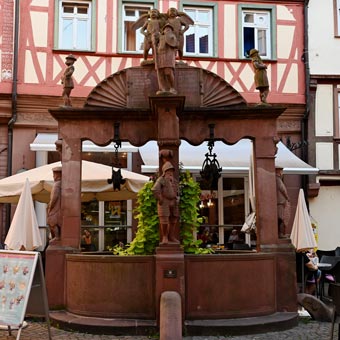
| The Engelsbrunnen (Angels' Well), a historic fountain located Wertheim. The fountain is made of red sandstone and dates back to 1574 and is named for the two angels perched on top, which bear the Wertheim coat of arms. |
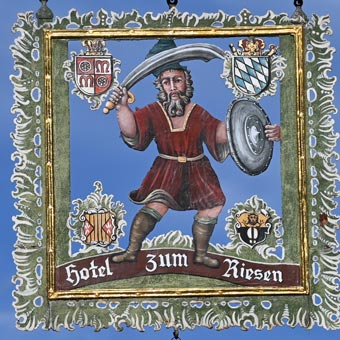
The Hotel zum Riesen (Hotel of the Giant) in Miltenberg. The hotel is considered one of Germany's oldest continuously operating inns, with its history dating back to at least 1411, and possibly as early as 1158. The David's Star on the sign has historical significance as a brewer's guild emblem - not primarily as a Jewish religious symbol |
||
 |
 |
||
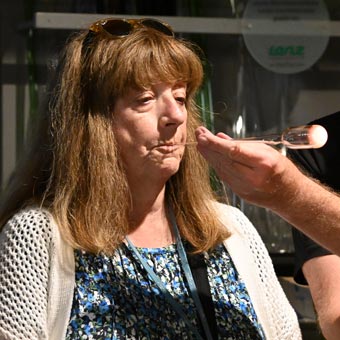
| A member of our party bravely agrees to blow a small bulb in a piece of very hot glass tubing | Who's that behind Liz - click to find out! | ||
 |
 |
||
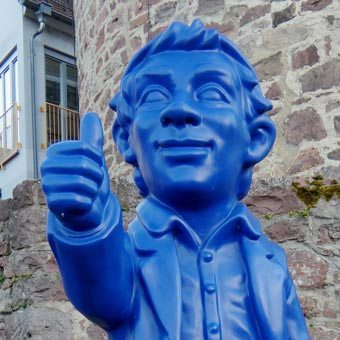
| The blue sculpture known as "The Optimist" by German conceptual artist Ottmar Hörl.
It is part of an art installation that has been displayed in various locations. |
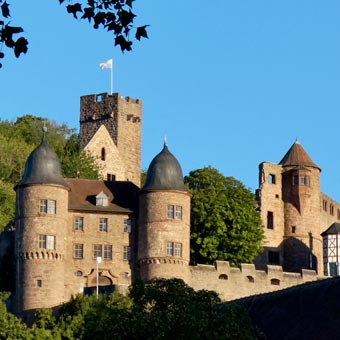
The historic Wertheim Castle (Burg Wertheim), one of the largest and most beautiful castle ruins in Germany, which dates back to the 12th century. It is situated high above the old town centre of Wertheim, a town at the confluence of the Main and Tauber rivers. | ||
| Day 6: Wurzburg | go to the top of this page | ||
 |
|||
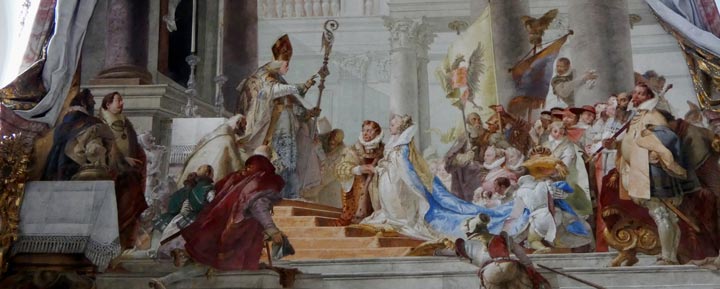
| The Emperor Frederick Barbarossa and his wife Beatrice kneel before Gebhard, Bishop of Würzburg. | |||
 |
 |
||
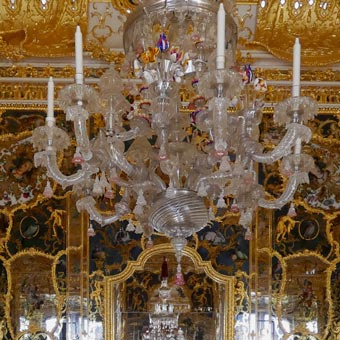
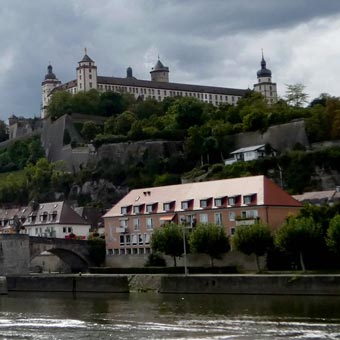
| The Mirror Cabinet in the Würzburg Residence, a stunning example of Rococo interior design. | The Alte Mainbrücke (Old Main Bridge) and the Marienberg Fortress in Würzburg | ||
 |
 |
||
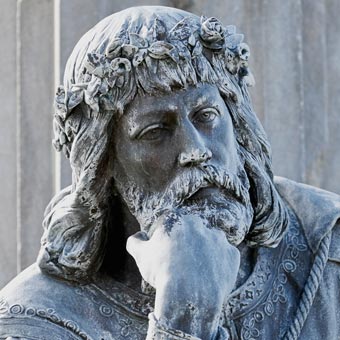
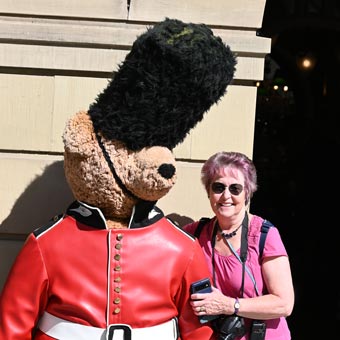
| Sculpture of poet Walther von der Vogelweide, Frankonia Fountain, Wuerzburg Residence | Liz and her bears! | ||
 |
|||
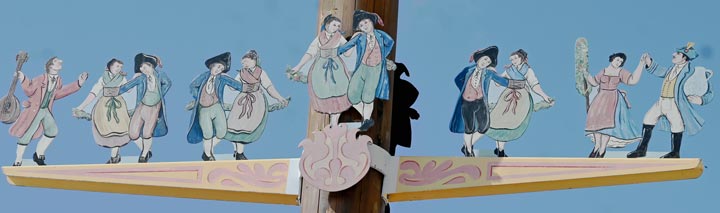
| When the towns and villages in Germany drive out the winter on Walpurgis Night, they celebrate with music, dancing and decorated maypoles. The May Day celebrations mark the end of the cold season and the arrival of spring | |||
| Day 7: Bamberg | go to the top of this page | ||
 |
 |
||
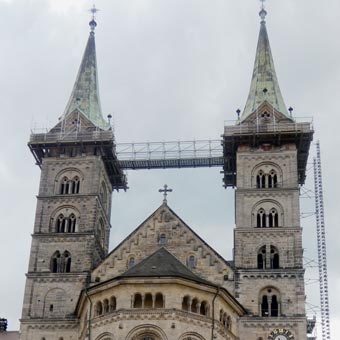
| The exterior of the Bamberg Cathedral in Bamberg, Germany, a significant historical and architectural landmark. The current structure is a late Romanesque building completed in the 13th century after earlier cathedrals burned down. It was founded by King (later Emperor) Heinrich II in 1002. The cathedral is part of the UNESCO World Heritage Site "Town of Bamberg". It is known for housing the only papal tomb in Germany (Pope Clement II) and the famous Bamberg Horseman statue. |
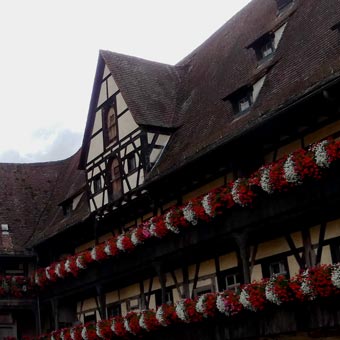
The Alte Hofhaltung, the residence of the bishops. Today it is a beautiful, quiet place and you can relax in its inner courtyard. |
||
 |
|||
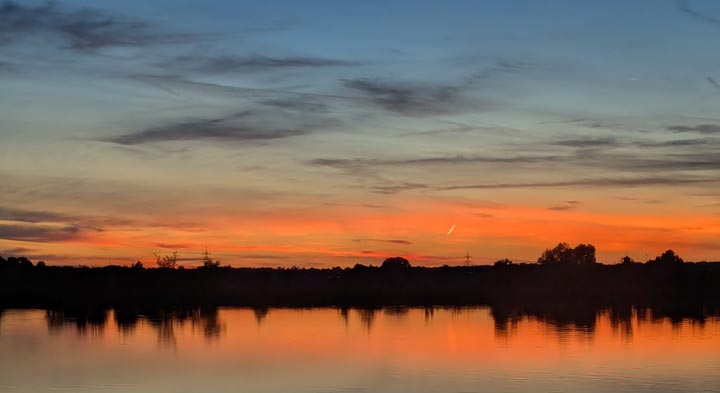
| Sunset on the river | |||
 |
 |
||
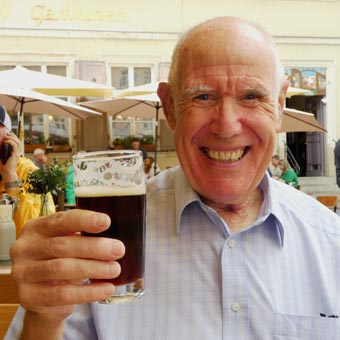
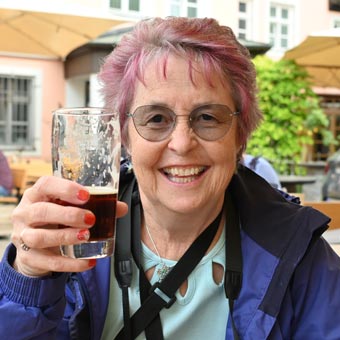
| Bamberg is world-renowned for its unique beer culture, particularly its famous Rauchbier (smoked beer). We tried a glass, but being unadventurous, we only bought one glass between us - so it's the same glass in both photographs. Actually is WAS lovely and we detected bacon as well as smoke! | |||
 |
|||
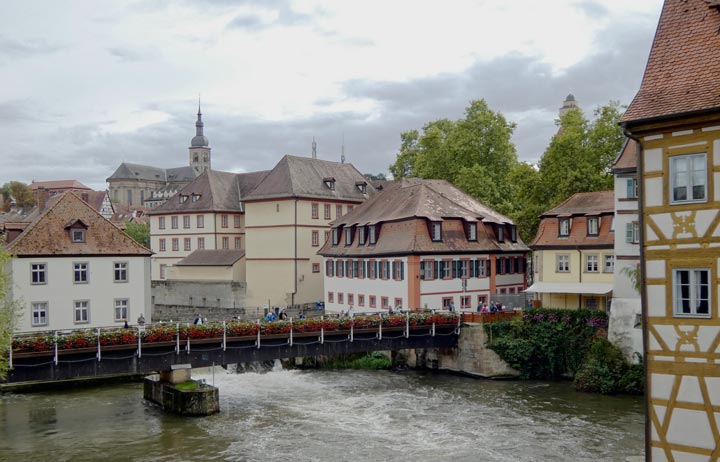
| The picturesque Bamberg Old Town showing buildings along the Regnitz River. This area is a UNESCO World Heritage site known for its medieval and baroque architecture. The scene features charming, half-timbered buildings situated precariously on a bridge over the rushing Regnitz River. The area is often referred to as "Little Venice" due to the row of old fisherman's houses. The prominent building with the spire in the background is the historic Bamberg Cathedral. The central building on the bridge is the iconic Altes Rathaus (Old Town Hall). | |||
| Day 8: Nuremberg | go to the top of this page | ||
 |
 |
||
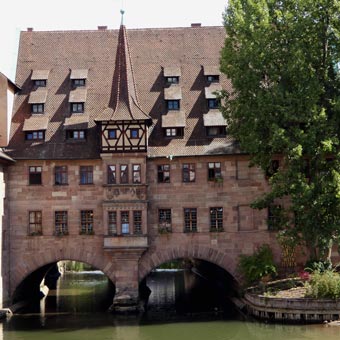
| The Heilig-Geist-Spital (Holy Spirit Hospital), a preserved medieval building located in the heart of Nuremberg's Old Town, Germany, built over the Pegnitz River. Built in the early 14th century, it was the largest hospital in the Free Imperial City of Nuremberg for centuries. The building is a charming example of medieval architecture. Its chapel served as the depository for the Imperial Regalia, the crown jewels of the Holy Roman Empire, from 1424 to 1796. Today the building serves as a retirement and nursing home |
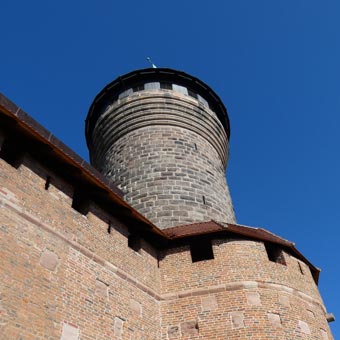
Nuremberg Castle has been on this site for around a thousand years with the main tower completed in the 14th century. There are so many ingenious methods that were used to stop invaders - a curved bridge over the moat for example means that a battering ram couldn’t be easily used to get through the main gate, and then a 90 degree turn soon after the gate stopped them further. There are also all the great features like tunnels with holes in the ceiling to pour hot oil over invaders, and so on. |
||
 |
|||
| The Battle of Nuremberg was a five-day battle between the forces of the United States 7th Army on one side, and Nazi Germany on the other during the last days of World War II. The battle saw some of the fiercest urban combat during the war and it took four days for the United States to capture the city.
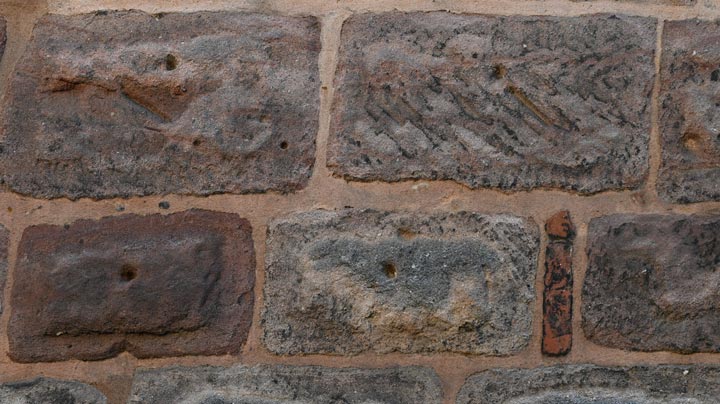
Much of Nuremberg was destroyed during the Second World War but they made the decision to rebuild it exactly as it was. You can see the walls that were rebuilt - those with holes in them are original as they used the holes as the method of picking them up. Walls without holes in the stones are new and placed with modern machinery. |
|||
| Day 9: Regensburg | go to the top of this page | ||
 |
 |
||
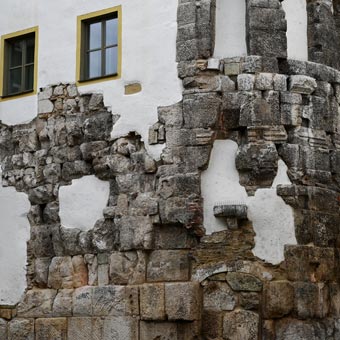
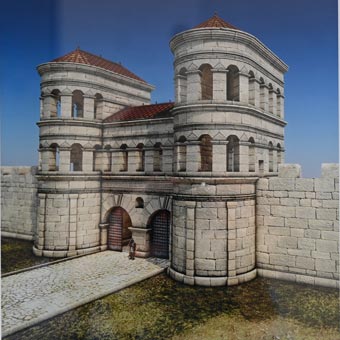
| The Porta Praetoria in Regensburg, Germany, which are the preserved remains of the north gate of the Roman legionary fortress Castra Regina. The gate was built in AD 179 by Emperor Marcus Aurelius and is one of the few surviving Roman gates north of the Alps. It is considered one of Germany's oldest surviving stone structures, dating back to the 2nd century. The Roman ruins have been incorporated into the current architecture of the city, specifically into the wall of a brewery that was built after 1650. The remains were rediscovered in 1885 after the brewery was demolished. |
|||
 |
 |
||
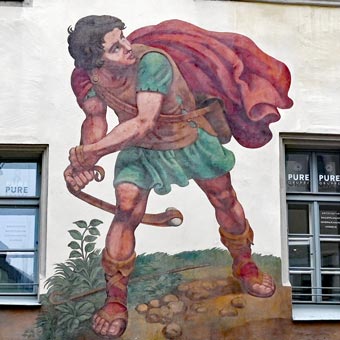
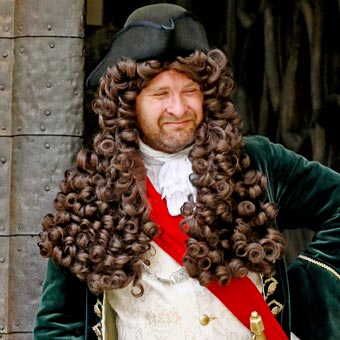
| The Goliathhaus (Goliath House), a historic building in Regensburg, famous for its large facade mural. | Colourful character! | ||
 |
|||
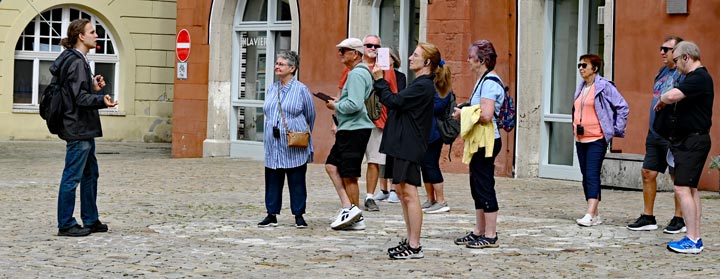
| A typical guided tour: Annie and Liz in the middle of the photograph | |||
 |
|||
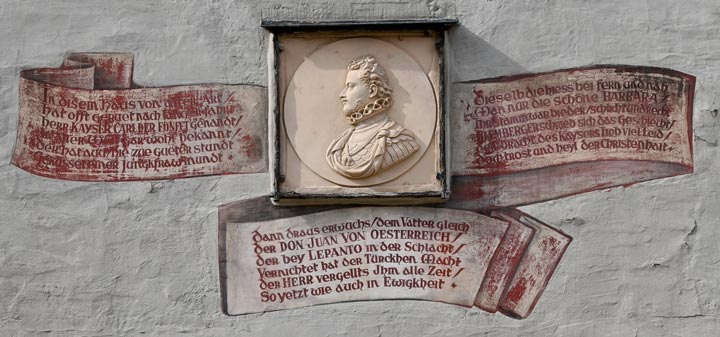
| An inscription painted on the facade of a building in Regensburg, known as the Kaiserherberge. The text commemorates Don Juan of Austria, the victor of the Battle of Lepanto. Translation Left Scroll: In this house of the Emperor Karl der Fünf (Charles V), was born Don Juan of Austria. Centre Scroll: Then grew up, like the father, Don Juan of Austria, who in the battle of Lepanto annihilated the Turks. May the Lord reward him for all time, now and in eternity. Right Scroll: Then the beautiful Barbara von Rimberg married into the family, a comfort and help to all Christians. |
|||
 |
|||
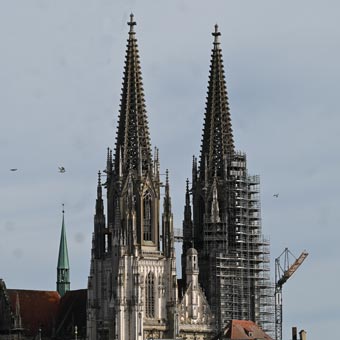
| Regensburg's Old Town, including the area pictured, is a UNESCO World Heritage site recognized as the "only authentically preserved large medieval city in Germany". Prominently featured are the spires of St. Peter's Cathedral, a significant example of French Gothic architecture that has towered over the city since the 13th century. The city has a rich history, founded by the Roman emperor Marcus Aurelius in 179 AD as "Castra Regina". Regensburg is known for its medieval architecture, including the famous Stone Bridge and the cathedral, with its spires reaching 110 meters in height. |
|||
 |
 |
||
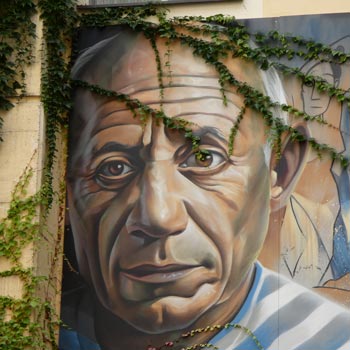
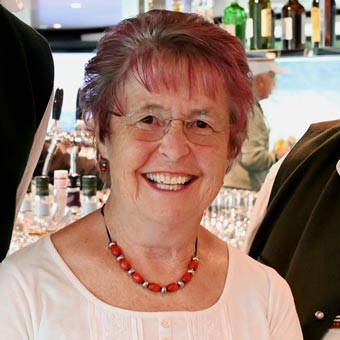
| A mural depicting artist Pablo Picasso. | Liz - but who is she with? | ||
 |
|||
| The Oompha band | |||
| Day 10: Passau | go to the top of this page | ||
 |
|||
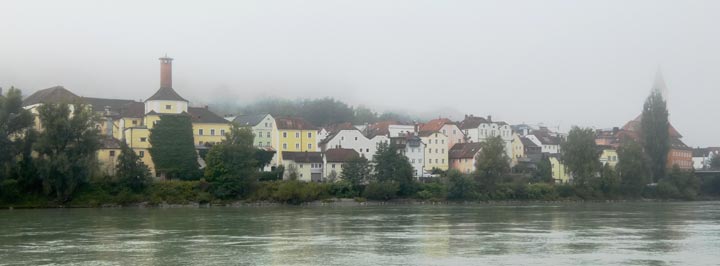
| A view of the city of Passau as seen from across a river on a misty day. Passau is known as the "Three River City" because the Danube, Inn, and Ilz rivers all converge there. The buildings along the riverbank are characteristic of the city's architecture, which includes baroque elements, such as those found in the prominent St. Stephen's Cathedral. The city's location by three rivers has made it prone to severe flooding throughout its history. |
|||
 |
 |
||
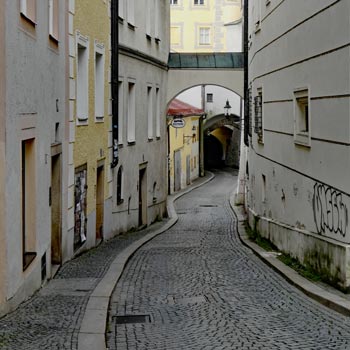
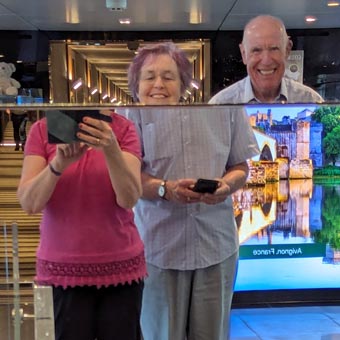
| A deserted street in Passau - note the cobbles, most towns we visited in Germany had cobbled streets | A strange "out of body" experience on the boat! | ||
 |
|||
| A detailed view of a ceiling fresco titled the "Triumph of the Catholic Church" by Johann Michael Rottmayr, located in St. Stephen's Cathedral in Passau, Germany. The fresco, completed around 1684, is a prominent example of Baroque art. The cathedral is renowned for housing the largest pipe organ in Europe. |
|||
 |
|||
| Veste Niederhaus, a historic castle located in Passau, Germany, at the confluence of the Danube and Ilz rivers.The castle is situated on a rocky headland by the river and forms part of a cohesive defensive system with the nearby Veste Oberhaus fortress. | |||
| Day 11: Malk -Durnstein | go to the top of this page | ||
 |
|||
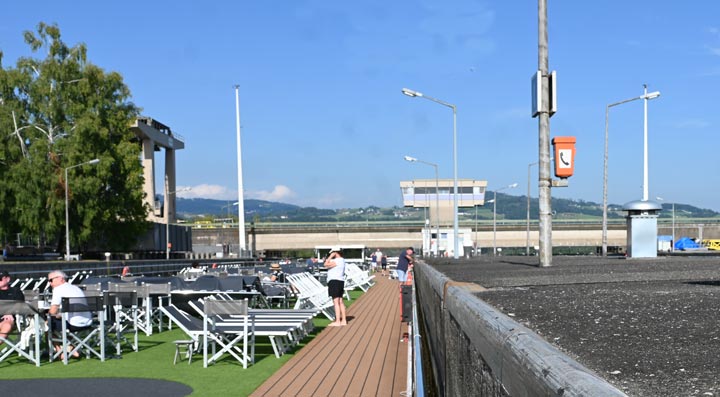
| Going through a lock - notice how little room there is between the boat and the lock side! | |||
 |
|||
| The Austrian Navy on manoeuvres | |||
 |
|||
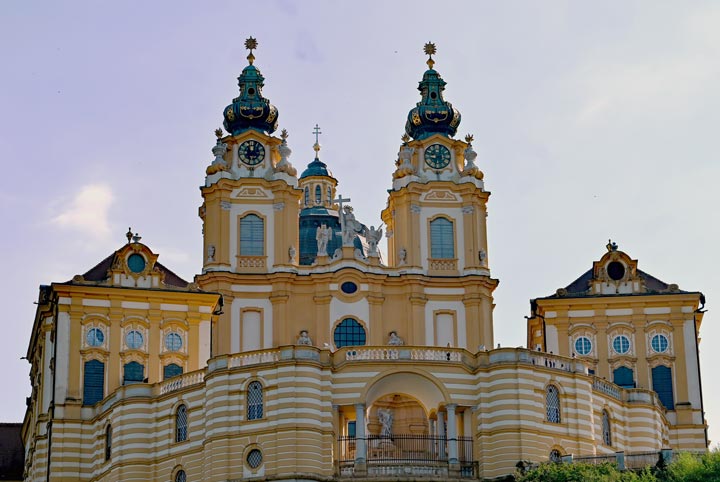
| Melk Abbey, a famous Benedictine monastery located in the town of Melk, Austria. This striking example of Baroque architecture sits on a rocky outcrop overlooking the Danube River. The abbey is characterized by its twin ornate towers, richly decorated façade, and a central dome rising above the church. | |||
 |
 |
||
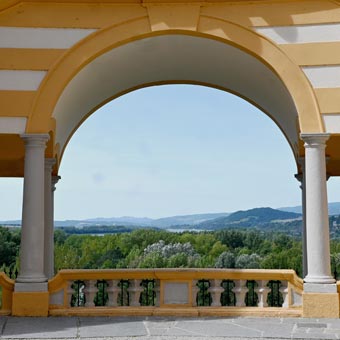
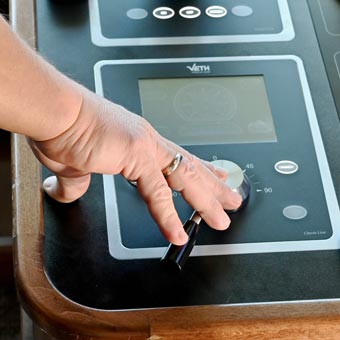
| A view from the monastery | The Captain with his hand on "the tiller" which steers the boat! | ||
 |
|||
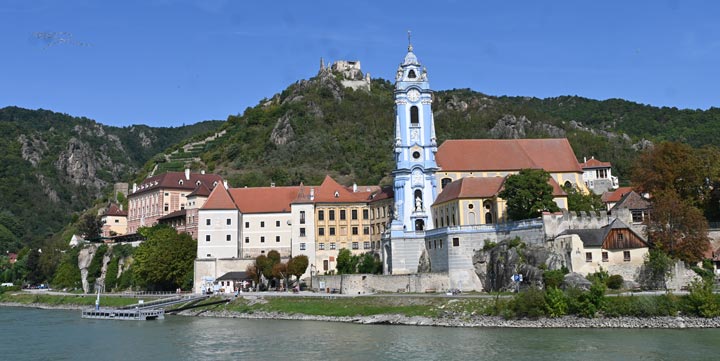
| The picturesque town of Dürnstein, located in the Wachau Valley along the Danube River in Austria. The most striking feature is the blue and white baroque tower of the Dürnstein Abbey, which stands prominently among the cluster of historic buildings with red-tiled roofs. Behind the town, green hills rise steeply, and at the top, the ruins of Dürnstein Castle are visible — a medieval fortress famous for once holding King Richard the Lionheart prisoner - see the statue and web site below. |
|||
 |
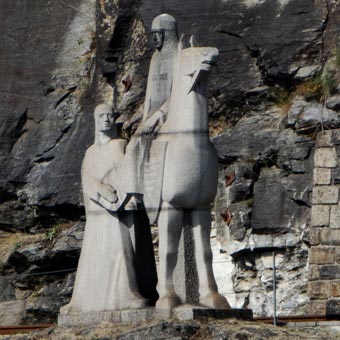 See the web site that tells the whole story See the web site that tells the whole story |
||
| Your intrepid travellers! | Blondel and King Richard: central to the Blondel saga is the shared song that served as a sign of recognition between the king and the troubadour. According to tradition, it was a composition known only to Richard and Blondel. See the web site that tells the whole story |
||
 |
|||
| Scenic Riverside Village in Austria’s Wachau Valley The image depicts a charming riverside village nestled in Austria’s Wachau Valley, a UNESCO World Heritage site known for its wine production and scenic landscapes. In the foreground, a calm river flows past a rocky embankment. Just beyond the river, a cluster of red-roofed houses and historic buildings is visible, with the most prominent structure being a large church with a tall, pointed steeple and a tiled roof. Behind the village, the hillsides are covered with terraced vineyards, a hallmark of the region’s wine-growing tradition. The terraces rise in neat, green steps up the slopes, eventually meeting a forested ridge at the top. The combination of the river, vineyards, and historic architecture creates a picturesque and tranquil rural scene. |
|||
 |
|||
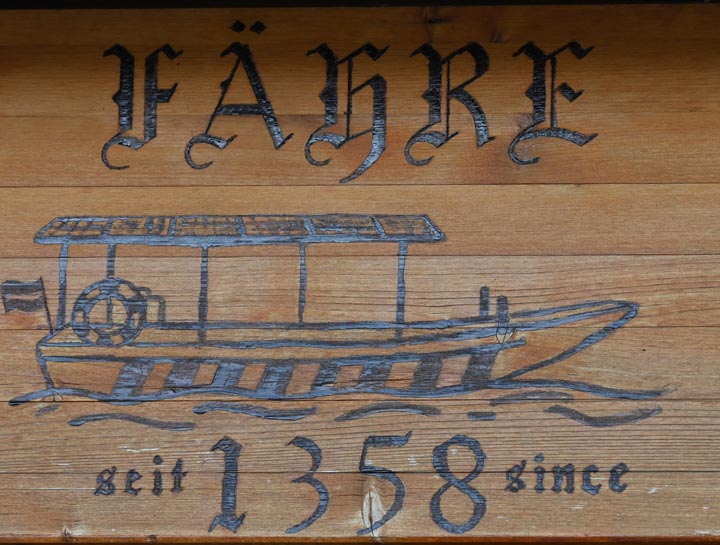
| Well established ferry service! | |||
 |
|||
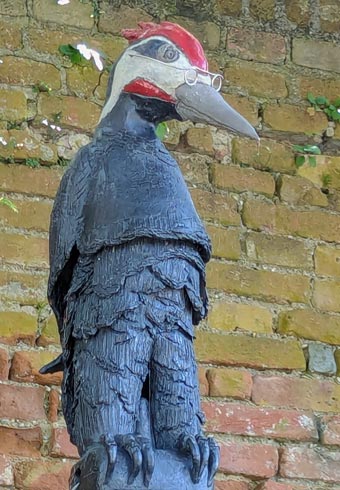
| Who is this? Click to find out! | |||
 |
 |
||
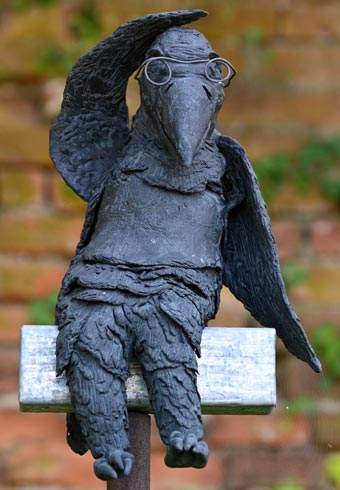
| Wonderful collection of crows! | |||
 |
 |
||
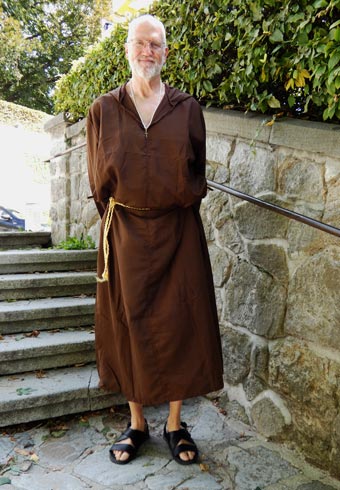
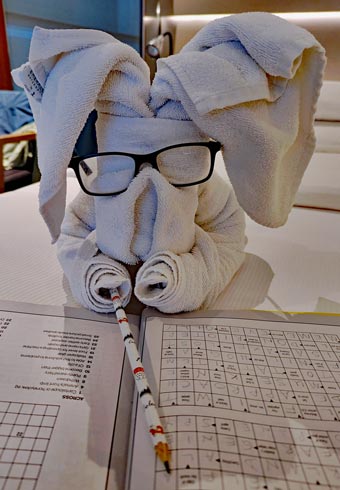
| A monk | An example of how our towels were folded | ||
 |
|||
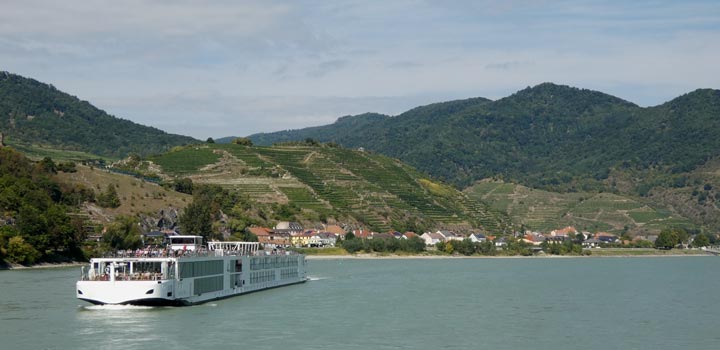
| Another cruise boat - notice the vineyards on the river bank | |||
 |
 |
||
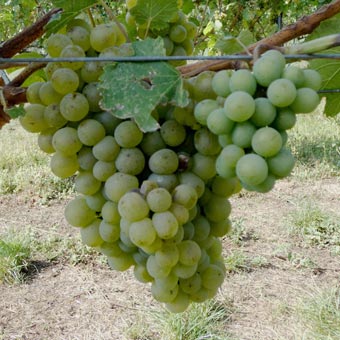
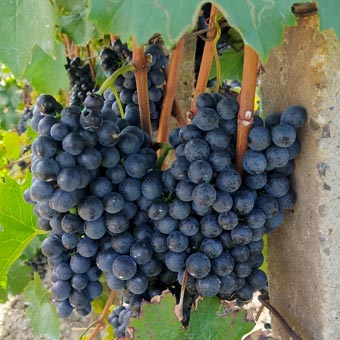
| Grapes, obviously a big business here | |||
| Day 12: Vienna | go to the top of this page | ||
 |
 |
||
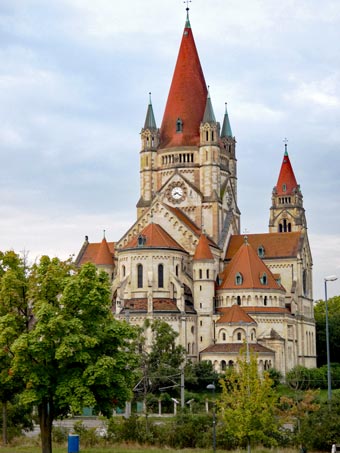
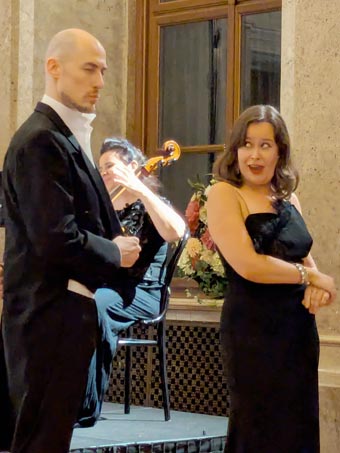
| The St. Francis of Assisi Church, also known as the Kaiser Jubilee Church, is a striking Roman Catholic church located in Vienna, Austria. It was built between 1898 and 1910 to commemorate the 50th anniversary of Emperor Franz Joseph I’s reign. The church is situated in Mexikoplatz, near the Danube River. | At the opera | ||
 |
 |
||
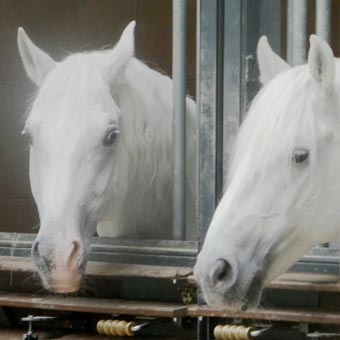
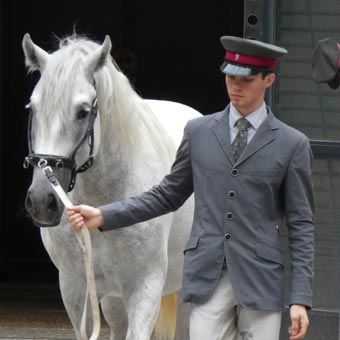
| The Spanish Riding school was first named during the Habsburg Monarchy in 1565, long before the French manege of Antoine de Pluvinel, and is the oldest of its kind in the world. Records show that a wooden riding arena was first commissioned in 1565, but it was not until 1729 that Emperor Charles VI commissioned the architect Joseph Emanuel Fischer von Erlach to build the white riding hall used today. Prior to that time, the school operated from a wooden arena at the Josefsplatz. For a time, the riding hall was used for various ceremonies, but it is now open to the public, who may witness the training and performances by the stallions. The Spanish Riding School was named for the Spanish horses that formed one of the bases of the Lipizzan breed, which is used exclusively at the school. |
|||
 |
|||
| They are just as much a part of Vienna as St. Stephen’s Cathedral and the Giant Ferris Wheel: the fiakers. For many tourists, a ride with the two-horse carriage is one of the highlights. There is almost no cozier way to explore Vienna’s attractions. The term "fiaker" originates from the French and refers to the hackney carriage stand in the Parisian Rue de Saint Fiacre. In 1720, the carriages - which had previously been referred to as "Janschky" coaches in Vienna - were renamed "fiakers" (and numbered). |
|||
 |
|||
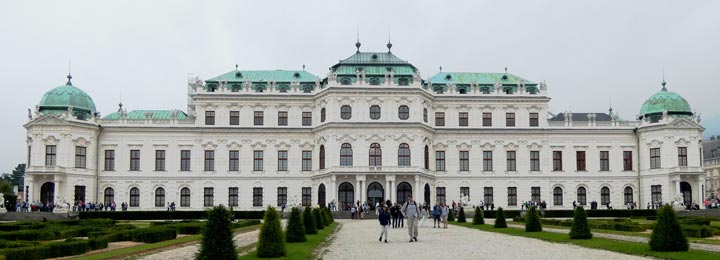
| Belvedere Palace in Vienna - a prime example of Baroque architecture. The building features a grand symmetrical façade with multiple windows, ornate decorations, and a central section topped by a green copper dome. Smaller domes are positioned at each corner of the structure, adding to its balanced design. | |||
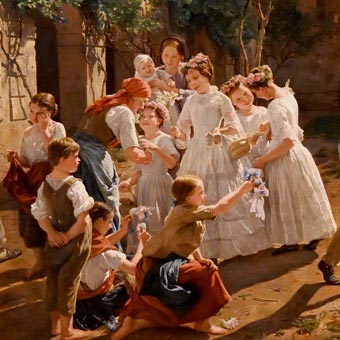
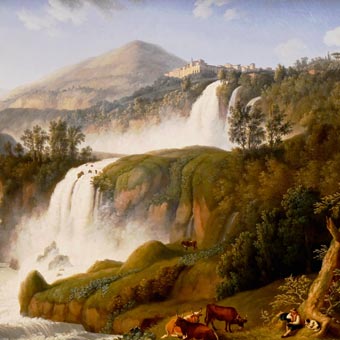
| I was amazed to find that there were very few restrictions on photographing painting and sculptures on display in Belvedere Palace. Here are a few photographs we took: | |||
 |
 |
||
| "The Morning of the Feast of Corpus Christi" an 1857 oil on canvas work by the Austrian artist Ferdinand Georg Waldmüller. The scene highlights community and faith, showing women and children arranging flowers and getting ready for the celebration. A closer look reveals a social contrast: four poorer children are present, including a boy without shoes and a crying girl in the background, contrasting with the wealthier family. |
"The Great Waterfall of Tivoli near Rome" by the German landscape painter Jacob Philipp Hackert. Painted around 1790, it is an oil on canvas piece that captures the grandeur of nature in the Romantic style. The painting depicts the dramatic waterfalls at Tivoli, a small town near Rome known for its scenic beauty. Hackert was renowned for his precisely observed depictions of natural phenomena and geological features. The work showcases a harmony between the powerful natural landscape and the peaceful presence of humans and animals in the foreground. |
||
 |
 |
||
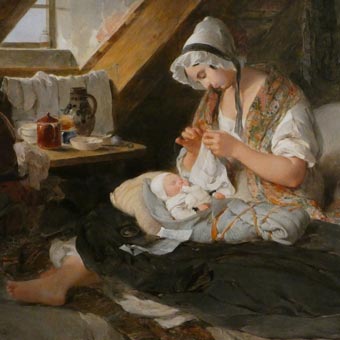
| The Poor Officer's Widow created by Austrian artist Peter Fendi in 1836.
The painting is an oil on canvas and belongs to the Biedermeier and Romanticism styles. It depicts a woman, presumably a widow, sitting under a sloped attic roof, sewing while two infants sleep beside her in a humble domestic scene. Fendi was known for his genre paintings and portraits, and this work is considered one of his notable pieces. |
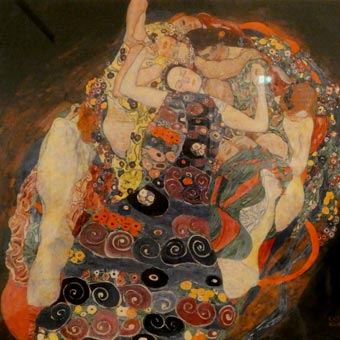
The Maiden by Austrian Symbolist painter Gustav Klimt, completed in 1913. The painting depicts seven women entwined in a swirling, dream-like composition, representing different stages of life, desire, and transformation. It is a notable example of Klimt's style, characterized by vivid colours, decorative patterns, and symbolic imagery. The central figure, the maiden, is shown sleeping peacefully under a blanket adorned with floral and spiral motifs. The work is considered one of Klimt's last paintings before his death in 1918. |
||
 |
 |
||
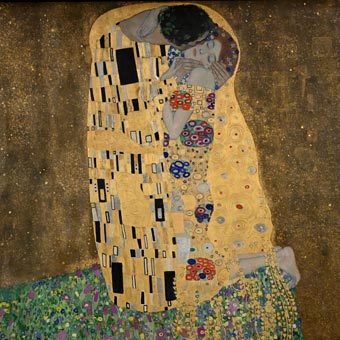
| The Kiss by Austrian symbolist painter Gustav Klimt. It was created between 1907 and 1908 during the height of his "Golden Period". The work depicts a couple locked in a tender embrace, their bodies entwined in elaborately decorated robes against a gold leaf background. Klimt used a combination of oil paint and gold leaf on canvas to create the work, a technique rarely used in easel painting. |
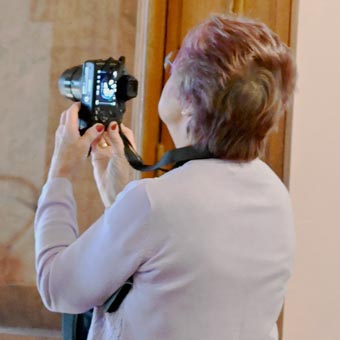
Liz | ||
 |
 |
||
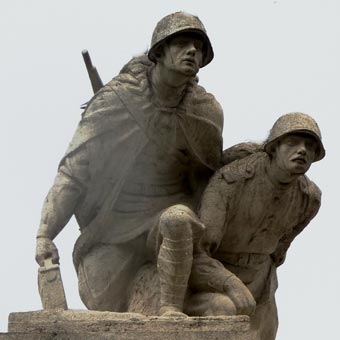
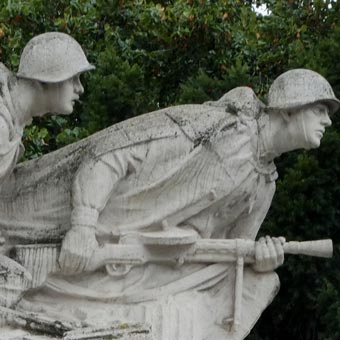
| The Soviet War Memorial Vienna lost a quarter of its building due to war activity; 270,000 Viennese were homeless because 90,000 flats were destroyed by Allied bombings and the fights in the city. The gas and electricity production had collapsed, even the canal system was nearly completely destroyed and 2,000 kilometres of water pipes were bombed. |
|||
 |
 |
||
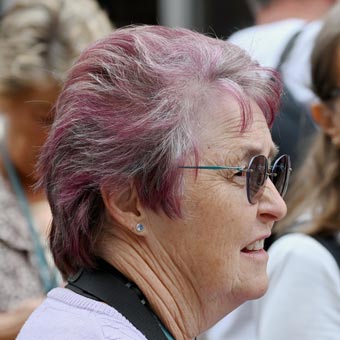
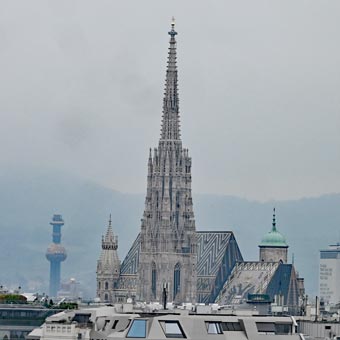
| Liz in Vienna | A view of Vienna, taken from the Belvedere Palace, with the most prominent feature being St. Stephen's Cathedral (Stephansdom) in the centre. The cathedral's tall Gothic spire rises above the surrounding buildings, making it a key landmark in the city. | ||
| Day 13: Bratislava | go to the top of this page | ||
 |
 |
||
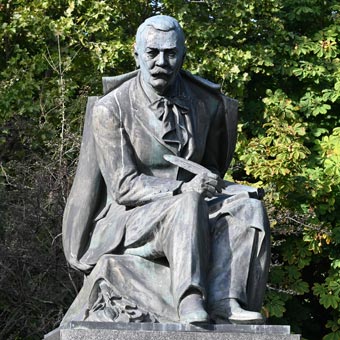
| A bronze statue of Pavol Országh Hviezdoslav, a prominent Slovak poet, dramatist, and translator. The sculpture depicts him seated, wearing formal attire with a long coat, and holding a book or papers in his lap, symbolising his literary contributions. Such statues are often found in public squares or parks in Slovakia, particularly in Bratislava, where Hviezdoslav is celebrated as one of the most important figures in Slovak literature. His works are known for their rich language and deep engagement with Slovak national identity. |
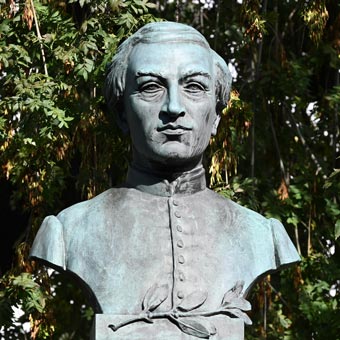
Statue of Anton Bernolák (1762–1813) - a Slovak linguist and Catholic priest who is notable for creating the first codified standard of the Slovak language in the late 18th century. | ||
 |
 |
||
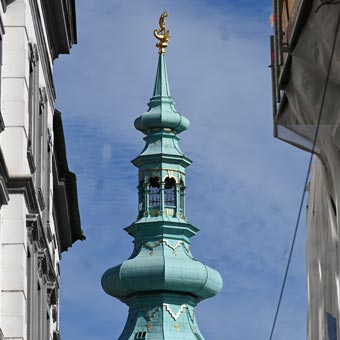
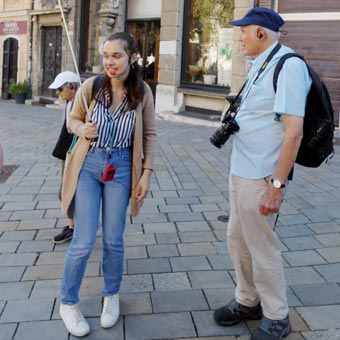
| Michael’s Tower stands as a prominent landmark at the heart of Bratislava, boasting a rich history spanning over seven centuries. It stands as the sole survivor among the original four city gates, predating Bratislava’s official city status granted in 1291 when it received its city privileges. | Our tour guide in Bratislava with John | ||
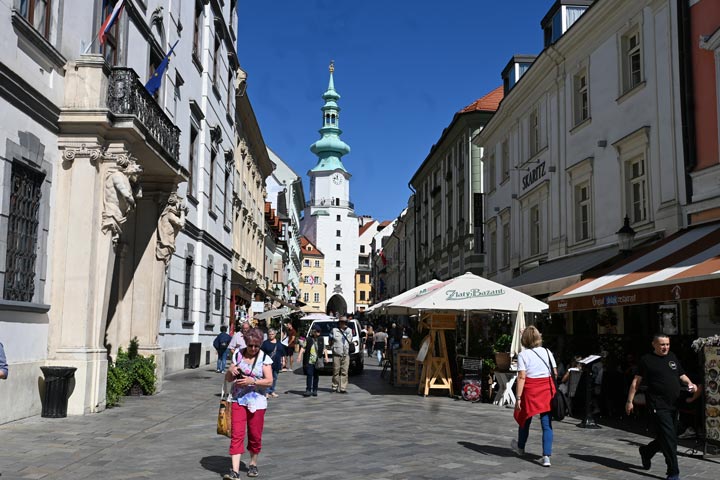 |
|||
| Michael’s Tower with tourists! | |||
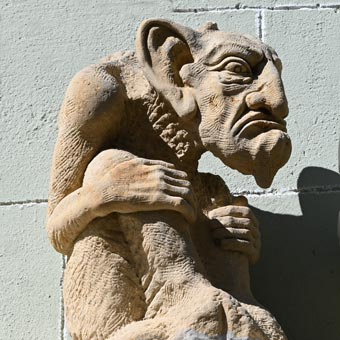 |
 |
||
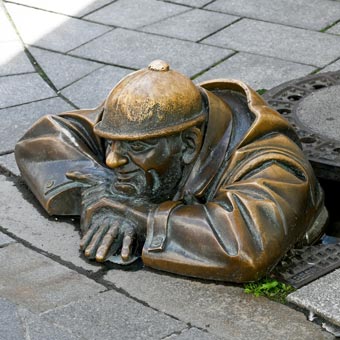
| Not everyone finds Cumil amusing! | Čumil – The “Man at Work” So, what’s the story behind this unusual man? Čumil is one of several whimsical statues that were installed in Bratislava’s Old Town in 1997. This was a few years after Slovak independence, at a time when the city was polishing its image and moving on from its grey, Communist past. The statues were a creative project to bring life and humour back to the historic streets. |
||
 |
|||
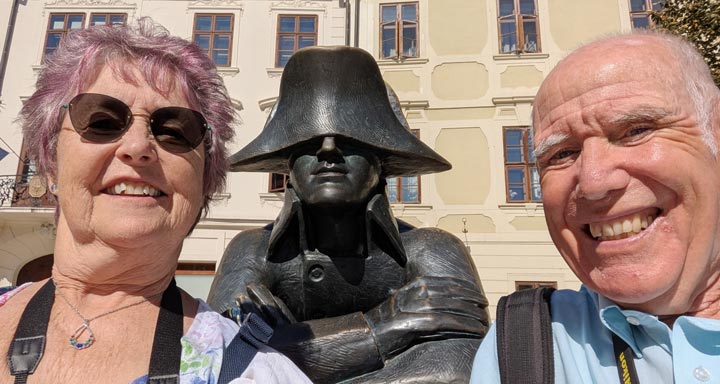
| We share a selfy with Napoleon! | |||
 Photographs 2025 for more information"/> Photographs 2025 for more information"/> |
 |
||
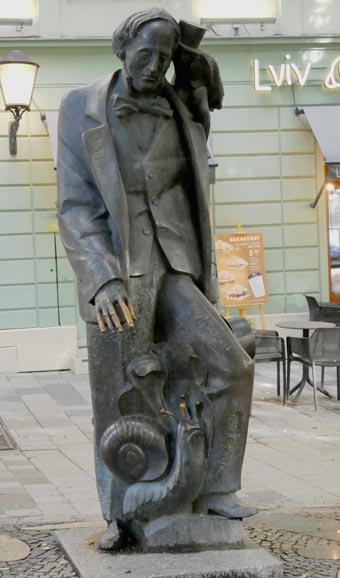
| Schöner Náci (Handsome Ignatius), a beloved and eccentric figure from Bratislava, who lived in the first half of the 20th century. See Photographs 2025 for more information |
Nestled in the vibrant atmosphere of Old Town Bratislava, is the Memorial of Hans Christian Andersen stands as a testament to the timeless influence of one of the most cherished fairy tale authors in history. | ||
| Day 14: Budapest | go to the top of this page | ||
 |
|||
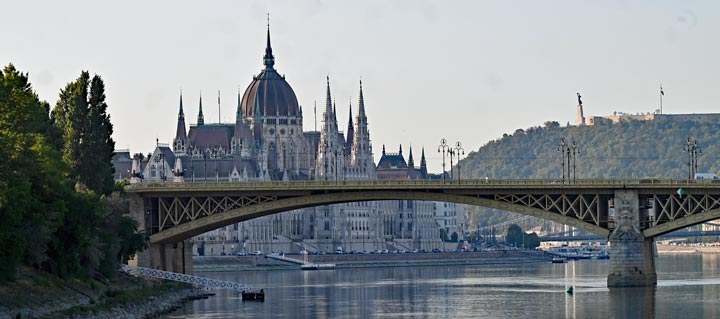
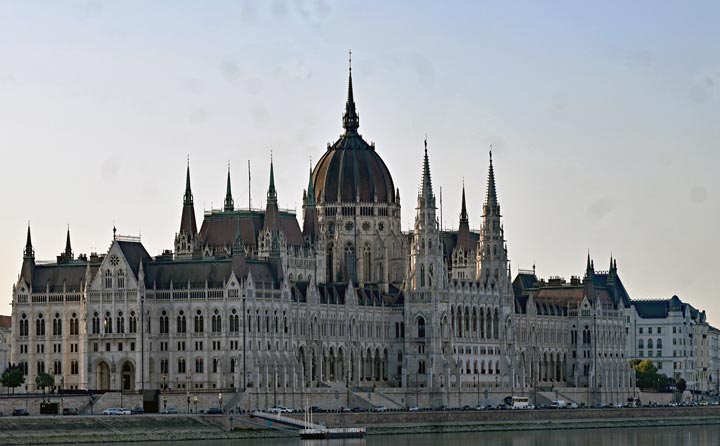
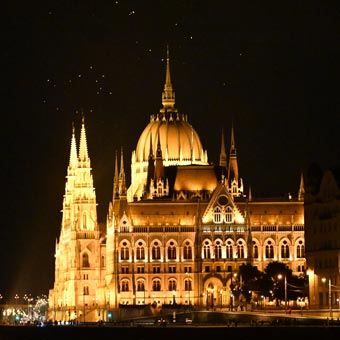
| The Hungarian Parliament Building in Budapest This photograph shows the Hungarian Parliament Building one of the most iconic landmarks in Hungary. The photograph is taken from the Danube River, with the Margaret Bridge in the foreground. The Parliament Building, completed in 1904, is a stunning example of Neo-Gothic architecture, with a central dome and numerous spires. It is located on the Pest side of the city and serves as the seat of the National Assembly of Hungary. |
|||
 |
|||
 |
|||
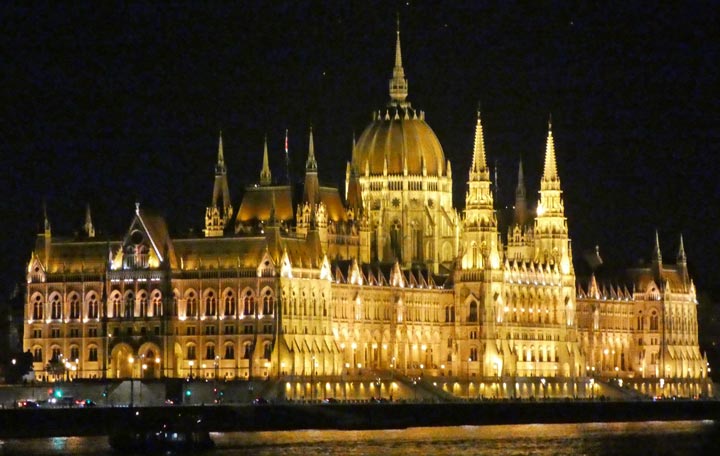
| At Night | |||
 |
 |
||
| The little dots of light are birds circling the building | The little dots of light are birds circling the building | ||
 |
 |
||
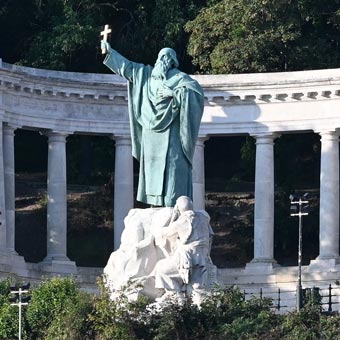
| The Statue of Saint Gellért (also known as the Gellért Monument) located on the side of Gellért Hill in Budapest, Hungary. The monument features a large bronze statue of Saint Gellért holding a cross, standing in front of a semi-circular colonnade. |
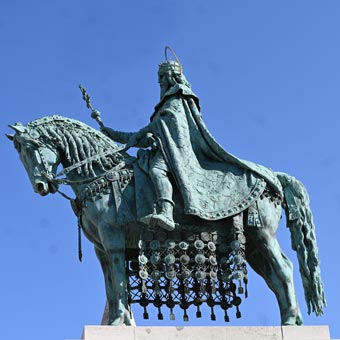
Sculpted by Stróbl Alajos, starting in 1898 and completing in 1903. This marked his first significant historical commission. The imposing figure of King Stephen, seated on a horse, reaches an impressive height, with the pedestal being 540 cm and the bronze figure an additional 400 cm. The king, donning a crown and draped in a cloak, holds a double cross in his right hand. | ||
 |
|||
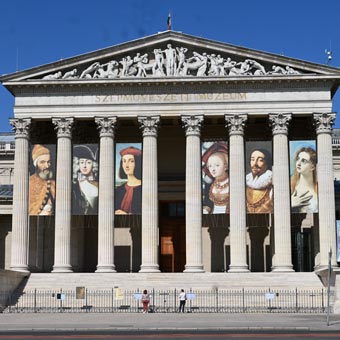
| The Museum of Fine Arts was built by the plans of Albert Schickedanz and Fülöp Herzog in an eclectic-neoclassical style between 1900 and 1906. The museum's collection is made up of international art including all periods of European art, and comprises more than 100,000 pieces. | |||
 |
|||
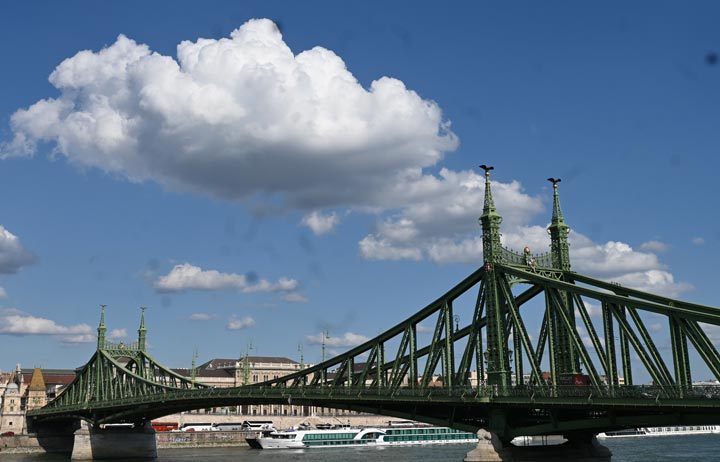
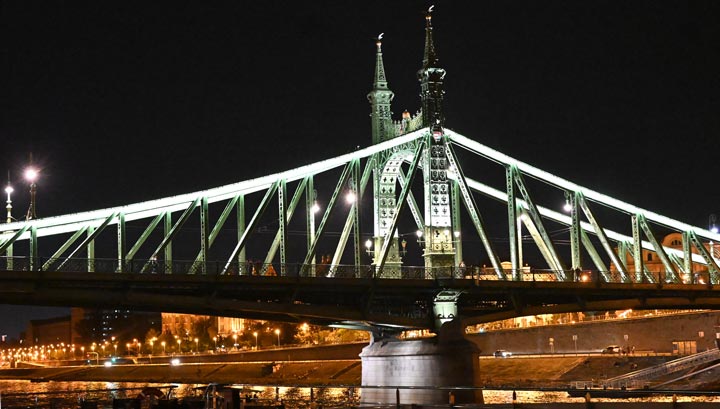
| The Liberty Bridge was initially called Franz Joseph Bridge, renamed Liberty Bridge after World War II to reflect Hungary’s liberation. The bridge has undergone reconstruction and reinforcement after war damage; Budapest’s Liberty Bridge was partially destroyed in World War II and restored by 1946. | |||
 |
|||
| At night | |||
 |
|||
| The Széchenyi Chain Bridge spanning the River Danube. It was the first permanent bridge to connect the cities of Buda and Pest, which later merged to form Budapest in 1873. The bridge was designed by British engineer William Tierney Clark and opened in 1849. It is a larger version of the bridge he built across the River Thames at Marlow, south Buckinghamshire. The bridge was destroyed by retreating German troops at the end of World War II but was fully restored and reopened in 1949. |
|||
 |
|||
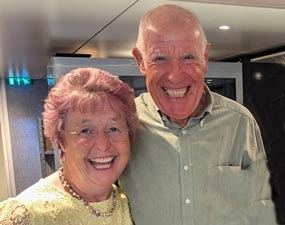
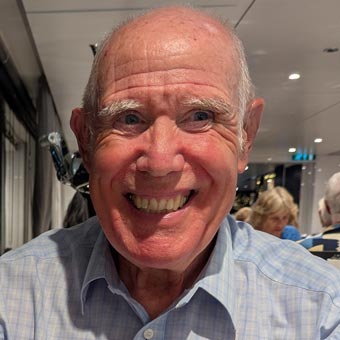
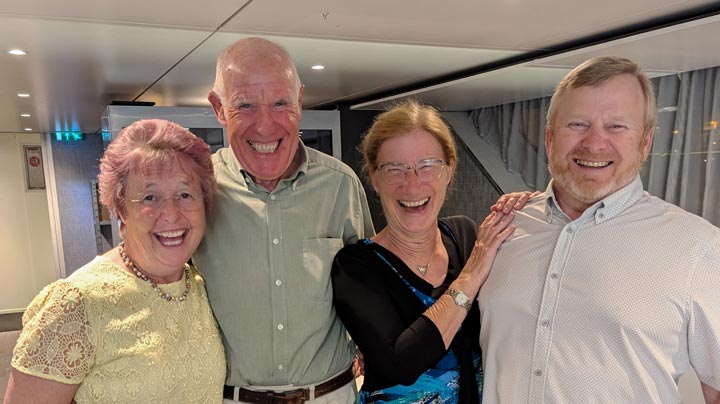
| New found friends: Liz, John, Annie and John - the latter from Ottawa If you look at the top of this page you will see an edited version of this photograph! |
|||
We were unable to complete the Emerald Cruises post sailing questionnaire so we'd like to take this opportunity to thank them for a wonderful cruise - the boat, the meals and all the staff were wonderful and the visits well organised - Many Thanks! |
|||
| go to the top of this page | |||